Beyond the Coastline of Stone
Africa’s Encounters and the Reclaiming of Heritage, Identity, and Value
Who defines what is worth preserving? A reflection on the uneven visibility of African heritage and the value of connected cultural landscapes.
1. Introduction: Heritage, Memory, and Visibility
African heritage is vast, layered, and deeply rooted in systems of knowledge, belief, and continuity that long predate external contact. It was expressed through communities, sacred landscapes, trade networks, and cultural practices that were not isolated, but connected across regions. Much of this heritage was not defined by monuments alone, but by living systems that linked people, place, and meaning over time (Ogbo et al.,2024).
Yet the way Africa has been historically represented often tells a different story.
The eighteenth-century European maps and documentation of the West African coastline, illustrating the concentration of forts, trading posts, and zones of commercial interest offers an early example of this shift (See Figure 1a and 1b).
They document the West African coastline remarkably, mapping forts, trading posts, and European settlements while inland African kingdoms remain comparatively undefined.
What these documents reveal is not only geography, but a reordering of importance. They frame Africa through sites of encounter, trade, and control, making certain histories highly visible while others recede (Mbembe, 2001; Mudimbe, 1988).
If the world were to remember Africa only through what has been most carefully preserved, it would remember a coastline of stone.
It would see the walls of Cape Coast Castle, the preserved facades of Gorée Island, and the fortified edges of maritime empires that once reached into the continent.
It would encounter Africa at the point of contact, where ships arrived, where trade was controlled, and where history was recorded in materials that endure.
Heritage, as defined within global institutional frameworks led by UNESCO, refers to the inheritance of the past that societies choose to preserve and transmit. Historically, this understanding has leaned heavily toward the tangible, privileging monuments, artifacts, and physical sites rooted in traditions of permanence and material preservation (Labadi, 2013; UNESCO, 1972).
In Africa, however, heritage encompasses more than what can be preserved materially. It is equally embedded in practices, rituals, and collective memory. It is both tangible and intangible, both built and lived. This divergence, according to Smith (2006), shapes not only what is recognized as heritage, but also what is funded, promoted, and remembered.
But this would be a narrow memory. Because beyond the coastline, where stone gives way to earth and ritual, Africa remembers differently.
In places like Timbuktu, heritage is renewed each year by human hands. In Lalibela, it is carved into the ground and sustained through worship. In Great Zimbabwe, it rises from the landscape as a testament to indigenous knowledge systems that predate colonial encounter.
The question, then, is not whether Africa has heritage but rather which parts of that heritage have been made visible, and why.
2. Indigenous African Heritage: Living Systems
Africa’s heritage is often embedded within interconnected cultural landscapes rather than isolated monuments (Smith & Akagawa, 2008). While sites such as Great Zimbabwe and Lalibela demonstrate architectural and spiritual depth, other forms of heritage extend beyond monumental construction.
The Osun-Osogbo Sacred Grove represents a sacred forest landscape where spirituality, ecology, and cultural identity intersect. Similarly, the Konso Cultural Landscape reflects centuries of indigenous knowledge through terraced agriculture and settlement patterns.
In Timbuktu, the mosques are continuously renewed through communal effort, reflecting traditions sustained through collective practice.
These examples illustrate that African heritage often depends as much on participation as on preservation, sustained through living traditions rather than being frozen in time.
3. The Numbers and the Paradox of Visibility
As of late 2025, UNESCO lists over 1,248 World Heritage Sites globally, distributed unevenly across regions. Europe and North America account for approximately 580 sites, followed by Asia and the Pacific with about 305 sites, Latin America and the Caribbean with roughly 154, Africa with about 112, and the Arab States with approximately 97 (UNESCO DataHub, 2025).
At the national scale, this imbalance becomes even more pronounced. Countries such as Italy and China individually hold more World Heritage Sites than entire regions, reinforcing longstanding disparities in global representation. Africa, by contrast, has only recently crossed one hundred sites despite its size and cultural depth.
UNESCO states that its mission is to “encourage the identification, protection and preservation of cultural and natural heritage around the world considered to be of outstanding value to humanity.” However, the distribution of listed sites reflects structural realities. Cultural heritage sites form the majority of UNESCO listings and are more commonly concentrated in wealthier nations with stronger institutional, financial, and technical capacity for nomination and long-term conservation (Labadi, 2013).
Global representation is not determined by resources alone. Countries such as the United States remain comparatively underrepresented on the list for political reasons, illustrating how inclusion is influenced as much by geopolitical dynamics as by economic capacity (Harrison, 2013).
Even UNESCO’s intangible cultural heritage (ICH) framework, introduced partly as a corrective measure to include traditions, practices, and knowledge systems that had been historically overlooked, continues to reflect uneven global recognition and institutional capacity. Although Western countries hold comparatively fewer intangible heritage inscriptions, they still account for a significant 33 percent of recognized elements within the framework.
Natural heritage sites are comparatively more evenly distributed globally as illustrated in figure 7. This suggests that disparities become most pronounced in categories shaped by historical visibility, institutional mediation, cultural valuation, and the financial capacity required for nomination, conservation, and long-term management.
Within Africa, a second layer of imbalance emerges. According to Statista (2025), the continent hosts approximately 112 UNESCO World Heritage Sites, of which roughly 65 to 75 percent are indigenous African in origin, while 15 to 20 percent reflect Arab or Islamic influence, and only 10 to 15 percent are directly linked to European colonial or trade activity (UNESCO World Heritage Centre, 2025).
This distribution reveals a striking paradox. Although Africa’s heritage is overwhelmingly indigenous in numerical terms, representation, funding, and global recognition do not reflect the same proportions. European-linked heritage, despite representing a smaller share of sites, often aligns more easily with dominant global narratives and established conservation frameworks (Harrison, 2013).
The majority exists, but it is not the majority that is seen.
4. European Heritage in Africa: Visibility and Power
European-linked heritage sites in Africa, though limited in number, occupy a highly visible position within global heritage discourse. Beyond Cape Coast Castle and Gorée Island, other sites such as Elmina Castle reflect this same coastal concentration. Along the Senegambian coast, Island of Saint-Louis reflects French colonial urbanism, while Kunta Kinteh Island illustrates riverine extensions of the same trade networks (UNESCO World Heritage Centre, 2025).
Across the continent, these sites can be broadly grouped into three categories. The first includes infrastructures of trade and extraction, such as forts and trading posts concentrated along the West African coast (Mbembe, 2001; Mudimbe, 1988).
The second reflects religious and cultural influence through missionary and colonial settlements, visible in places such as M’banza Kongo.
The third category includes strategic military and maritime infrastructure, represented by sites like Fort Jesus, the Island of Mozambique, and fortified trading points extending along both the Atlantic and Indian Ocean coasts (Mudimbe, 1988).
These sites illustrate how European presence in Africa became materially embedded along strategic coastal and urban corridors, many of which remain central to global heritage narratives today.
5. Arab and Islamic Heritage: Exchange and Adaptation
Arab and Islamic heritage in Africa extends across urban, religious, and cultural systems that developed through centuries of exchange (Levtzion & Pouwels, 2000). While Stone Town in Zanzibar remains a prominent example, other sites such as Lamu Old Town in Kenya illustrate the enduring character of Swahili urbanism.
Further inland, the Great Mosque of Djenné stands as one of the most iconic examples of Sudano-Sahelian architecture, blending Islamic religious traditions with indigenous earthen construction techniques.
These sites illustrate how Islamic heritage in Sub-Saharan Africa, though external in origin, became deeply localized through adaptation, material practice, and cultural integration.
6. Serial Heritage and the Politics of Representation
One of the most revealing aspects of how heritage is defined and represented in Africa can be found along the coast of Ghana. The country holds the highest concentration of European-built forts and castles in the world, with dozens of structures lining its coastline, most built between the fifteenth and eighteenth centuries. These include major sites such as Cape Coast Castle, Elmina Castle, and Christiansborg Castle, alongside others like Fort Prinzenstein and Fort San Sebastian (See Figure 12). Built by Portuguese, Dutch, Danish, Swedish, and British powers, these structures served as trading posts and later as key nodes in the transatlantic slave trade. Despite their number and scale, thirty-two of these sites are collectively inscribed by UNESCO as a single World Heritage property under the title “Forts and Castles, Volta, Greater Accra, Central and Western Regions” (UNESCO World Heritage Centre, 2025).
UNESCO inscribes these forts collectively as a serial property, recognizing them not as isolated monuments, but as interconnected sites linked through a shared historical function and narrative. In this case, the forts are treated as components of a broader system linking trade, military control, and exchange that collectively expresses what UNESCO defines as “Outstanding Universal Value” (UNESCO Operational Guidelines, 2023).
These structures formed a continuous chain along the coastline and facilitated trade, enforced military control, and eventually became central nodes in the transatlantic slave trade. Their significance, therefore, lies not in their individuality, but in their relational function within a larger economic and geopolitical system.
As a network, the forts collectively narrate a broader history of European competition, trade, and extraction along the West African coast. Also, managing the forts as one heritage property allows for coordinated conservation strategies, unified policy frameworks, and streamlined access to international funding according to UNESCO guidelines.
7. The Systemic Bias in Recognizing Indigenous Networks
The logic behind the serial property classification raises a broader question about how other interconnected heritage systems are interpreted within global frameworks. If European-built structures in Africa can be recognized collectively within global heritage frameworks, why are indigenous African systems so often interpreted differently?
Across the continent, many indigenous heritage forms also exist as networks (Harrison, 2013; UNESCO World Heritage Centre, 2021). Sacred groves, trade routes, cultural landscapes, and ritual territories often span multiple locations and communities. The Osun-Osogbo Sacred Grove, for instance, extends beyond a forest into a shared spiritual landscape, while the Konso Cultural Landscape represents a terraced cultural landscape shaped through settlement, agriculture, and social organization.
This pattern is equally evident in the historic mosques of northern Ghana (See Figure 13). The Larabanga Mosque (Fig. 13a), often regarded as the oldest mosque in the country and dating to the fifteenth century, forms part of a wider Sudano-Sahelian architectural tradition that extends across West Africa.
Characterized by whitewashed adobe walls, projecting timber beams, and pyramidal towers, this architectural tradition extends across Mali, Burkina Faso, and northern Ghana. This architectural tradition is reflected in mosques such as Bole Mosque, Nakore Mosque, Banda Nkwanta Mosque, Dondoli Mosque, and Wuriyanga Mosque, among others, forming a dispersed but interconnected architectural and cultural landscape.
A similar pattern can be observed in the painted earthen architecture of West Africa. In northern Ghana, the Sirigu Painted Homesteads are renowned for their elaborate geometric and nature-inspired murals, hand-painted by women using natural pigments on mud compounds. These homesteads embody a living architectural tradition shaped through communal practice and identity. Yet, despite their richness and continuity they remain largely unrecognized within global heritage frameworks.
A striking parallel exists in the Royal Court of Tiébélé, where Gurunsi communities similarly decorate earthen structures with intricate patterns. Unlike Sirigu, however, Tiébélé has gained international recognition and has been inscribed on the UNESCO Tentative List, positioning it as a site of potential global heritage value. This contrast is telling. These closely related traditions, sharing similar materials, techniques, and cultural meanings, are positioned differently within global systems of recognition.
Despite these regional linkages and shared traditions, such sites rarely receive the same narrative coherence or institutional recognition as heritage systems associated with European encounter. Instead, they are often treated as isolated examples or overlooked entirely, particularly where their significance lies in continuity, material fragility, and living tradition rather than monumentality.
This contrast reveals something deeper about heritage frameworks. Systems shaped by historical interaction, particularly those involving Europe, are more readily assembled into coherent heritage narratives than systems rooted in indigenous cultural persistence and practices (Harrison, 2013; Mudimbe, 1988; Smith, 2006).
The classification of Ghana’s forts therefore reveals more than a method of heritage inscription. It exposes how certain histories are more easily organized into globally recognized narratives, while others remain fragmented despite equally complex cultural relationships across space and time.
8. Heritage, Encounter, and Global Legibility
How do systems of recognition shape which heritage traditions gain international prominence? Why do some histories emerge as coherent narratives of preservation while others remain fragmented? And must African heritage be tied to moments of encounter to be recognized as significant?
Beyond the points of encounter, indigenous heritage, though equally expansive, is often represented in fragmented ways, making its depth and scale less legible within dominant systems of heritage recognition.
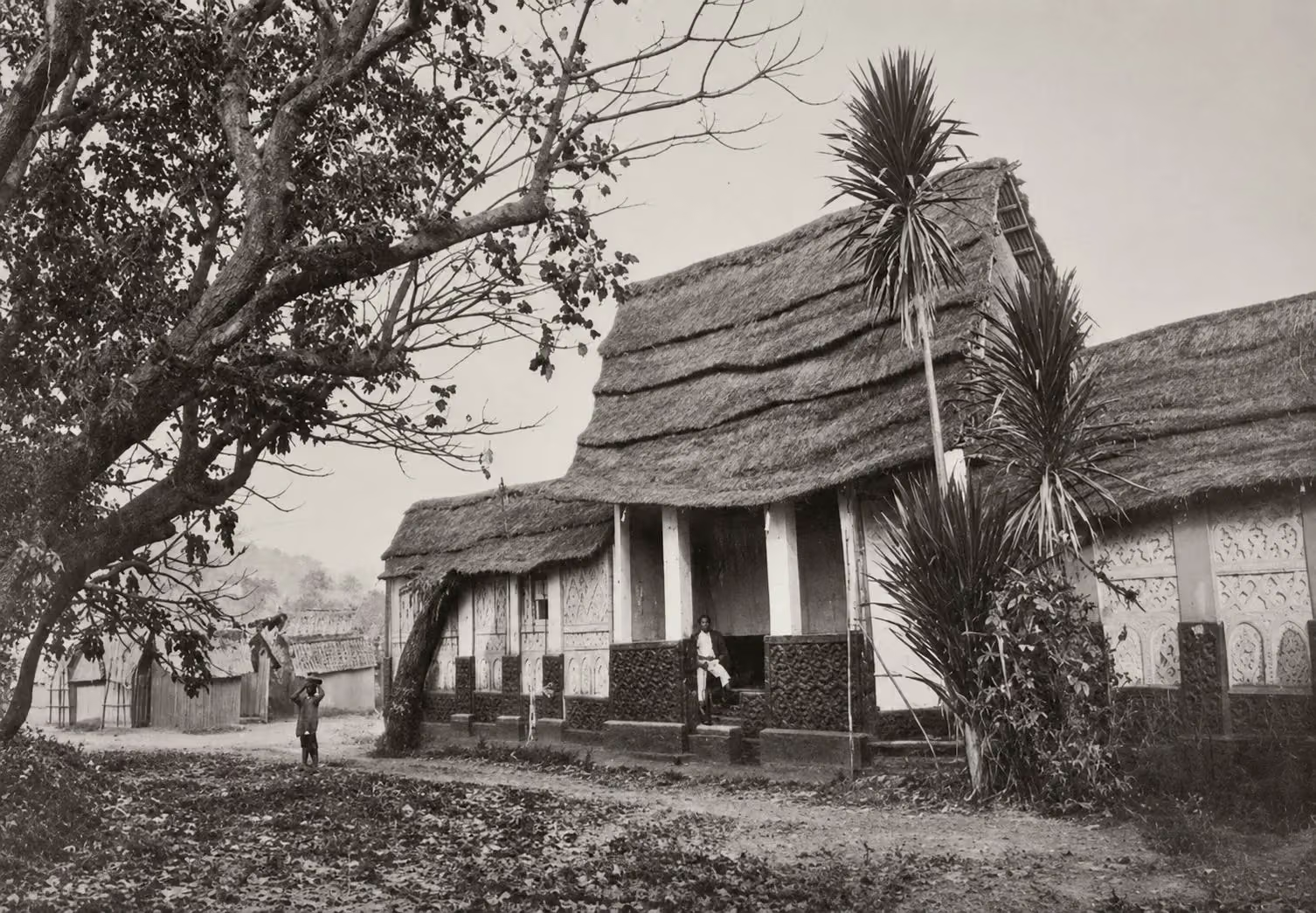
Yet the issue is not simply one of exclusion. In some cases, it is precisely the presence of European contact that shapes what becomes recognizable as heritage. The Asante Traditional Buildings, for instance, are among the few indigenous architectural sites in Ghana inscribed on the UNESCO World Heritage List. Described as the last remaining testimony of the great Asante civilization, these courtyard structures, built of timber, bamboo, and mud plaster, using wattle-and-daub techniques, are adorned with symbolic bas-reliefs linked to Adinkra traditions (See Figure 15).
Their significance extends beyond cultural and spiritual value. They also embody a complex technical, religious, and symbolic heritage that has been transmitted across generations. At the same time, their historical positioning within a period of interaction and entanglement with European powers has contributed to how they have been framed, documented, and preserved.
This suggests that heritage is not only discovered, but constructed through the conditions that make it recognizable at a global scale (Harrison, 2013; Smith, 2006). Sites associated with broader narratives of trade, political encounter, or exchange more readily attain global recognition, while heritage rooted in localized systems of practice and belief often remains less visible within dominant frameworks.
The question, then, is not whether African heritage exists in sufficient depth, but under what conditions it becomes visible, valued, and sustained. The Osun-Osogbo Sacred Grove (UNESCO World Heritage Centre, n.d.) illustrates this complexity, where renewed global recognition emerged partly through the New Sacred Art movement initiated in the late 1950s by Austrian artist Susanne Wenger in collaboration with local artists and custodians of the grove (See Figure 4c–d).
Rather than rejecting the classification of Ghana’s forts as a serial property, the challenge is to broaden the framework through which heritage is understood. If networks of encounter can be recognized as unified systems, then networks of continuity, including those expressed through spiritual practice, symbolic architecture, and communal knowledge, should be equally legible.
Only through such a shift can Africa’s heritage be understood not as a collection of discrete sites, but as a continuum of meaning across space and time.
9. Rebalancing the Narrative
European and Arab-linked heritage remain essential parts of Africa’s layered history and should not be excluded from preservation. The deeper issue lies in how different histories are framed, weighted, and ultimately remembered.
At present, cultural heritage associated with European encounters is often among the most visible and coherently presented on the global stage, particularly when compared to Arab-influenced heritage on the continent. Indigenous African traditions constitute a major share of the continent’s cultural heritage, yet they remains comparatively underrepresented in visibility, funding, and global recognition. This imbalance is shaped by what is considered legible within dominant heritage frameworks, as well as disparities in financial resources, technical expertise, and institutional capacity (Harrison, 2013; Smith, 2006).
Rebalancing the narrative therefore requires a shift in emphasis. Indigenous African heritage should be positioned as a central foundation of identity and historical continuity, rather than treated as supplementary or peripheral. European and Arab influences should be understood within this broader context, as part of Africa’s historical encounters rather than the primary lens through which its past is interpreted.
This also calls for a rethinking of value. Heritage cannot be assessed solely through monumentality, visibility, or material permanence, but must also account for continuity, cultural meaning, and living practices (Smith & Akagawa, 2008). In doing so, Africa’s heritage can be presented not as a fragmented collection of sites shaped by external contact, but as a complex and evolving narrative grounded in its own systems of knowledge and expression.
10. Responsibility, Climate Risk, and Stewardship
The responsibility for safeguarding Africa’s heritage cannot rest solely with UNESCO. While the organization provides important frameworks for recognition and conservation, it operates within a global system that does not always align with local priorities or urgencies.
The implications of this gap are already visible. The mapped distribution of coastal heritage sites across Africa reveals that a significant concentration of both cultural and natural heritage lies along vulnerable coastlines increasingly exposed to sea-level rise. Recent research according to Clarke & Khalaf (2022), indicates that 56 of 284 identified coastal heritage sites in Africa are already exposed to extreme coastal events such as flooding and erosion, with projections suggesting that nearly 191 sites could face similar threats by 2050 (See Figure 16).
The map makes this risk spatially legible, stretching from North Africa through the Gulf of Guinea to parts of East and Southern Africa, highlighting not isolated threats but a continental pattern of vulnerability.
Equally significant, however, is who determines the response to these risks. If intervention continues to rely primarily on external funding, expertise, and prioritization, there is a real risk that decisions about what is preserved will be shaped by external value systems. This often privileges sites that are already globally recognized, monumental, or tied to dominant historical narratives. In such a scenario, Africa risks not only losing heritage to climate change, but also losing agency over which parts of its history are deemed worth saving.
Africa must therefore take a more proactive role in defining its own heritage priorities in the face of climate risk. This involves strengthening national and regional institutions, investing in local conservation knowledge, and embedding heritage within broader frameworks of urban planning, environmental management, and education. Independent and collaborative funding mechanisms must also be developed to reduce reliance on external validation.
More importantly, it requires a shift in mindset from reactive preservation to strategic guardianship. What does Africa choose to protect when not everything can be saved? Which histories, landscapes, and cultural systems are prioritized, and why? Can locally grounded models of protection offer alternatives to conventional conservation approaches?
The future of African heritage will not be determined only by rising seas, but by the decisions made in response to them. The map therefore becomes not only a representation of vulnerability, but a call for agency, coordination, and long-term stewardship.
11. Conclusion: From Recognition to Reorientation
Africa does not lack heritage. What remains uneven is the extent to which its diverse systems of memory, knowledge, and cultural continuity are organized, interpreted, and sustained within global frameworks of recognition. Across the continent exist interconnected landscapes of architecture, spirituality, trade, ritual, and communal practice that extend far beyond isolated monuments or sites of external encounter.
The recognition of serial heritage demonstrates that significance can emerge not only from individual structures, but from the relationships between places, histories, and cultural systems across space and time. If such logic can be applied to networks shaped through trade and colonial encounter, it can also be extended to indigenous systems rooted in continuity, collective memory, and lived practice. Doing so requires moving beyond narrow definitions of permanence toward broader understandings of cultural landscapes and interconnected heritage.
The future of African heritage will depend not only on preservation, but on collaboration, stewardship, and the ability of African institutions, communities, scholars, and governments to define priorities on their own terms. It is through this collective effort that Africa can strengthen a more grounded and self-determined understanding of its past, present, and future, not as fragmented sites of memory, but as interconnected systems of meaning across the continent.
References
- Clarke, J., & Khalaf, N. (2023). African heritage sites threatened as sea-level rise accelerates. Nature Climate Change, 13(5), 482–489. https://doi.org/10.1038/s41558-023-01616-5
- Harrison, R. (2013). Heritage: Critical approaches. Routledge.
- Labadi, S. (2013). UNESCO, cultural heritage, and outstanding universal value: Value-based analyses of the World Heritage and Intangible Cultural Heritage Conventions. AltaMira Press.
- Levtzion, N., & Pouwels, R. L. (Eds.). (2000). The history of Islam in Africa. Ohio University Press.
- Mbembe, A. (2001). On the postcolony (Vol. 41). University of California Press.
- Mudimbe, V. Y. (1988). The invention of Africa: Gnosis, philosophy, and the order of knowledge. Indiana University Press.
- Ogbo, C. V., & Ndubisi, E. J. (2024). Exploring and preserving our african cultural values and heritage in the face of global civilization. African heritage, identity and sustainability, 1.
- Smith, L. (2006). Uses of heritage. Routledge.
- Smith, L., & Akagawa, N. (Eds.). (2009). Intangible heritage. Routledge.
- Statista Research Department (2025, November 26). Africa: UNESCO World Heritage Sites by country 2024. Statista. https://www.statista.com/statistics/1254875/world-heritage-sites-in-africa-by-type
- UNESCO World Heritage Centre. (2023). Operational guidelines for the implementation of the World Heritage Convention. UNESCO. https://whc.unesco.org/en/guidelines/
- UNESCO World Heritage Centre. (n.d.). Cultural landscapes. https://whc.unesco.org/en/culturallandscape/
- UNESCO World Heritage Centre. (2025). UNESCO DataHub. UNESCO. https://data.unesco.org/explore/dataset/whc001/information
- UNESCO. (1972). Convention concerning the protection of the world cultural and natural heritage. UNESCO World Heritage Centre. https://whc.unesco.org/en/conventiontext/
- UNESCO. (2003). Convention for the safeguarding of the intangible cultural heritage. UNESCO. https://ich.unesco.org/en/convention
Beyond the Built / Essay 05
Written by Michael Mawuena Baccah. Originally published by The Archinsight / TAI Publishing House.