The Logic Behind the Trans-Atlantic Slave Trade
How Empire, Profit, and Human Division Built a Global System
How imperial ambition, economic incentives and human division created a system of exploitation—and what that history asks of the systems we build today.
Introduction
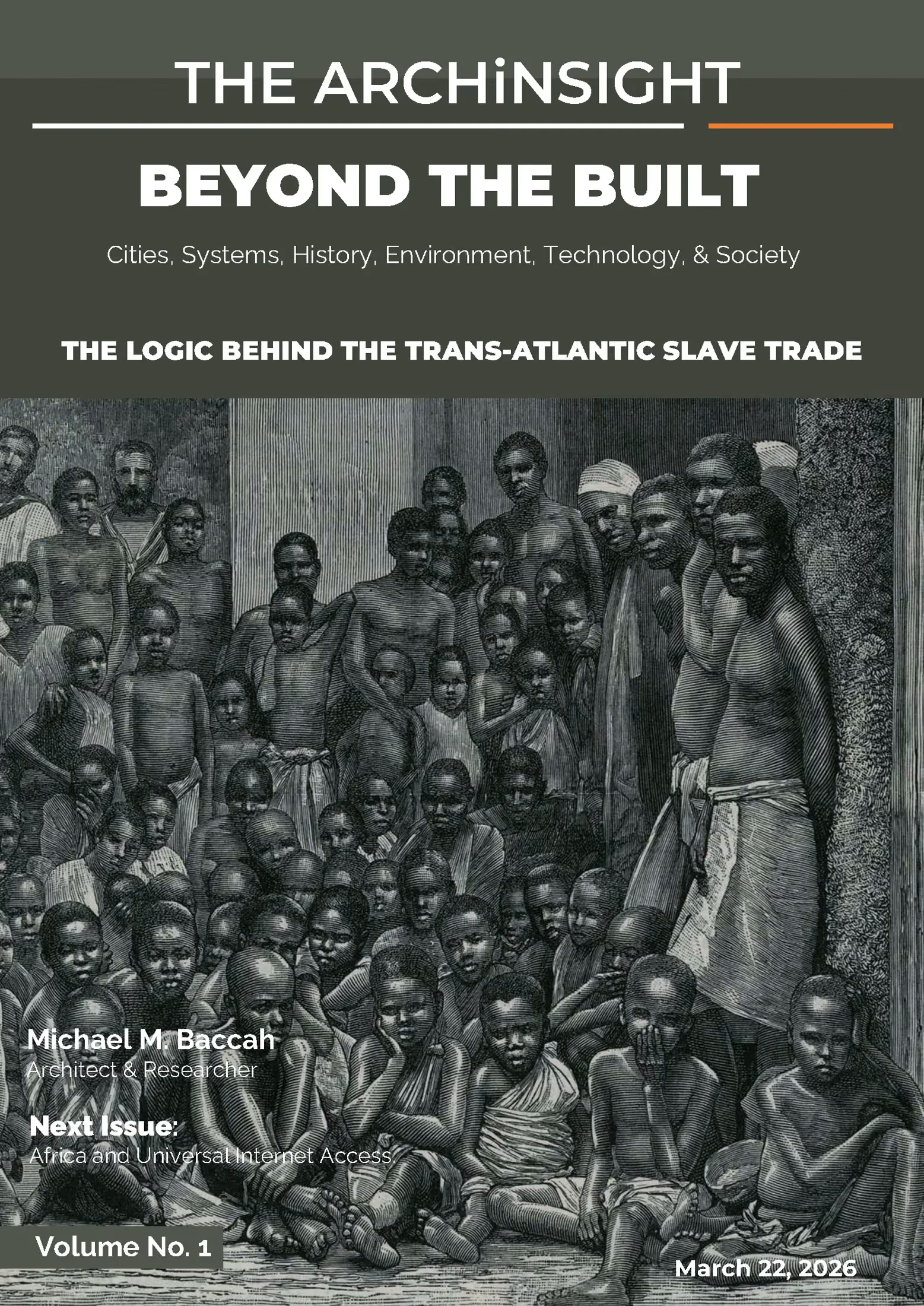
The trans-Atlantic slave trade is often reduced to a question of blame. Were Europeans solely responsible, or did African participation make it a shared crime? Framed this way, the discussion misses a deeper and more unsettling truth. The slave trade was not sustained by one group alone, but by a system designed to turn human division into economic opportunity. It was part of a broader imperial logic in which profit, not morality, determined strategy, and where different regions of the world were exploited in different ways depending on what would yield the greatest return.
In reality, the trans-Atlantic slave trade emerged within a wider imperial economic system that developed during the early phases of European global expansion. This system relied on extraction, control of resources, and the reorganization of human labor on a global scale. From the Americas to Africa, China, and later the Middle East, European powers adapted their methods depending on the social, political and economic conditions they encountered.
Although these developments occurred before modern capitalism fully took shape, they formed part of the historical processes that helped create the global economic order that exists today. The violent accumulation of wealth during this period was described by Karl Marx as primitive accumulation, the process through which capital was initially gathered to fuel capitalist production. Sociologist Immanuel Wallerstein, through his world-systems theory, later argued that the modern global economy developed through relationships between powerful core regions and exploited peripheral regions. The historian Walter Rodney similarly emphasized that Europe’s development was historically intertwined with the exploitation of Africa.
Seen through this broader perspective, the trans-Atlantic slave trade was not simply a regional tragedy but part of a larger global system of imperial extraction.
Different Regions, Different Strategies of Control
European expansion did not rely on a single method everywhere it occurred. Instead, imperial powers adjusted their strategies depending on the political and economic conditions they encountered.
In the Americas, European settlers were primarily interested in acquiring land. Indigenous societies had deep spiritual and cultural relationships with their territories, meaning land was not simply a commodity that could be easily purchased or surrendered. As a result, European expansion often involved warfare, displacement, disease, and ecological disruption that gradually undermined Indigenous societies. Later developments such as the large-scale extermination of buffalo across the Great Plains further weakened Indigenous communities whose economies depended on those animals.
Wishing to control the land of the native people, and knowing the Indians’ complete dependence upon the buffalo, 19th century government leaders launched a campaign to wipe them out. In so doing, they forced the Indians into a sedentary lifestyle more in line with the prevailing European notions of private property and "civilization."
In China, European traders faced a different obstacle: economic exclusion. For centuries, European merchants eagerly imported Chinese goods such as tea, silk, and porcelain. Yet China, under the Qing Dynasty, had little interest in European products. As a result, large quantities of European silver flowed into China.
European traders searched for ways to reverse this imbalance for many years. Eventually British merchants began exporting opium grown in colonial India into China. The drug spread rapidly and caused widespread addiction.
When the Qing Dynasty attempted to suppress the trade, Britain responded with military force during the First Opium War (1839–1842) and later the Second Opium War (1856–1860). China’s defeat forced it to open treaty ports and grant concessions that significantly expanded European influence within the country.
In the Middle East, imperial competition later focused heavily on oil. As petroleum became essential to industrial economies and modern warfare during the twentieth century, foreign powers increasingly sought influence over oil-producing regions such as Iran, Iraq, and the Arabian Peninsula. Control over energy resources became a major factor in international politics, shaping alliances, conflicts, and foreign intervention.
Across these regions, the methods varied, but the underlying objective remained the same: securing economic advantage through access to land, markets, labor, or resources.
Africa just presented a different set of circumstances.
Why the Slave Trade Became the Strategy in Africa
Unlike the Americas, Europeans initially lacked the capacity to conquer large territories deep within Africa. Disease environments such as malaria, limited European manpower, and the presence of established African political systems made large-scale conquest extremely difficult during the early centuries of contact. Yet the demand for, and opportunity to extract, human labor emerged.
Although the political systems in Africa were not “strong” in the European sense of centralized bureaucratic states, they were strong in ways rooted in African social organization, cultural authority, and control over land, people, and trade. Kingdoms and states such as Akwamu, Denkyira, and later the Asante Empire, as well as decentralized but organized societies from the Gold Coast, exercised real political authority within their territories. They controlled trade routes, commanded military forces, and maintained systems of governance embedded in their own traditions and ways of life.
Because of this, Europeans could not simply impose control inland. They had to engage with existing structures of power. Instead, European powers established coastal trading forts. Along the Gold Coast (present-day Ghana), the Portuguese constructed Elmina Castle in 1482, one of the earliest European fortifications in sub-Saharan Africa. Over time, other European powers including the Dutch, British, and Danes built additional forts such as Cape Coast Castle and Christiansburg Castle.
These forts functioned primarily as commercial centers rather than colonial capitals during the early period. From these coastal enclaves, European traders relied on African intermediaries to obtain captives who would then be transported aboard their ships across the Atlantic to work on plantations in the Americas.
This structure is often used today to argue that Africans were equally responsible for the slave trade because Africans captured and sold other Africans to European traders. While African elites certainly participated in the system, understanding the broader context is essential.
The trans-Atlantic slave trade was driven primarily by the demand for labor in plantation economies in the Americas. The rapid expansion of plantations producing sugar, cotton, and tobacco created an enormous demand for labor, making the slave trade one of the most profitable enterprises of the early modern world. European merchants controlled the ships, the financing of the voyages, the trans-Atlantic trade routes, and the plantation economies that relied on enslaved labor. African participation occurred within this global economic structure.
Division and the Economics of Human Trade
At the beginning of the slave trade, it would have been extremely difficult for an African king or merchant to sell members of their own immediate community to foreign traders. However, in regions where multiple kingdoms and ethnic groups existed, selling captives from rival groups became easier to justify.
European traders inserted themselves into these existing political rivalries.
Several West African states became involved in the slave trade in different ways. The Kingdom of Dahomey organized military campaigns partly to capture enslaved people for export. The Oyo Empire in present-day Nigeria participated in regional trading networks connected to the Atlantic system. In the Gold Coast region, powerful states such as Akwamu, Denkyira, and later the Asante Empire interacted with coastal trading groups such as the Fante, who often acted as intermediaries between inland states and European merchants.
European traders exchanged firearms, textiles, alcohol, and manufactured goods for enslaved people. Access to firearms could strengthen certain states relative to their rivals, sometimes intensifying warfare and increasing the number of captives available for sale.
Over time, the economic incentives created by the trade reshaped political dynamics across parts of West Africa. What may have begun primarily as the sale of war captives gradually expanded into a system in which human beings themselves became commodities. In this sense, the system did not create division, but embedded itself within divisions that already existed and intensified them.
Trade Over Conquest: The Logic of the Slave Trade
The trans-Atlantic slave trade operated primarily as a commercial system rather than a system of direct conquest because trade was economically efficient for European merchants. Launching large-scale military campaigns deep into the African interior would have been extremely costly and dangerous. Disease environments would have caused heavy casualties among European soldiers, and many of the very people they sought to enslave might have died in battle. Trade allowed European merchants to obtain enslaved people with far lower risk and cost.
At the same time, the system depended heavily on African participation. If African societies had collectively refused to sell captives into the Atlantic trade, European powers might eventually have attempted greater military intervention to obtain slaves directly. Such conflicts could have resulted in large-scale wars that would have been devastating for both sides.
There is some historical basis for this possibility. In the early phases of European contact with West Africa, the Portuguese did attempt to capture enslaved people directly through raids along the Senegambian coast in the fifteenth century. These expeditions, however, proved difficult to sustain. They were met with resistance, required significant manpower, and exposed Europeans to unfamiliar terrain and disease environments. As a result, the Portuguese gradually shifted from raiding to establishing trading relationships with coastal African states.
Similarly, while European forts along the Gold Coast such as Elmina and Cape Coast Castle became centers of trade, they were not designed to support large-scale inland military campaigns. European presence remained largely coastal for centuries, reflecting the limits of direct conquest during this period. These early experiences demonstrated that direct slave raiding by Europeans was costly and inefficient.
Trade, mediated through African intermediaries, provided a far more sustainable and profitable system. It allowed European merchants to access a steady supply of enslaved people without the risks associated with large-scale warfare in the African interior.
The system that ultimately developed, trade mediated through African intermediaries, proved to be the most economically efficient arrangement for sustaining the slave trade over several centuries. In this sense, the structure of the slave trade was not accidental but reflected a calculated adaptation to local conditions, where profit was maximized not through direct control, but through the strategic use of existing political systems and divisions.
Conclusion: The Human Cost of Development
The systems that shaped the modern world produced extraordinary technological progress, global trade, and economic growth. Yet they also produced immense suffering and deep inequality.
The trans-Atlantic slave trade reminds us that economic systems are never morally neutral. They reflect the incentives, ambitions, and divisions present within human societies. Capitalism has contributed to globalization and development in powerful ways. Yet the global economic system that exists today inherited structures that were formed during centuries of imperial extraction.
The deeper lesson of this history is not simply about assigning blame to one group or another. It is about understanding how systems of exploitation become possible. They emerge when economic incentives align with human division, when tribes compete with tribes, nations compete with nations, and societies pursue advantage over others.
The history of the trans-Atlantic slave trade shows that the greatest danger to humanity is not only greed or power, but the ease with which human divisions can be transformed into systems of profit.
Beyond the Built / Essay 01
Written by Michael Mawuena Baccah. Originally published by The Archinsight / TAI Publishing House.